
Geography reference
the Americasan Capitals: Country and Capital List
the Americasan capitals are listed below in alphabetical order by country. The table contains 45 entries because it follows the the Americas category in this site's dataset; it does not claim to set one universal number of the Americasan countries. Below the table, you can see how to read its scope, which names are often confused, and a practical way to study the pairs.
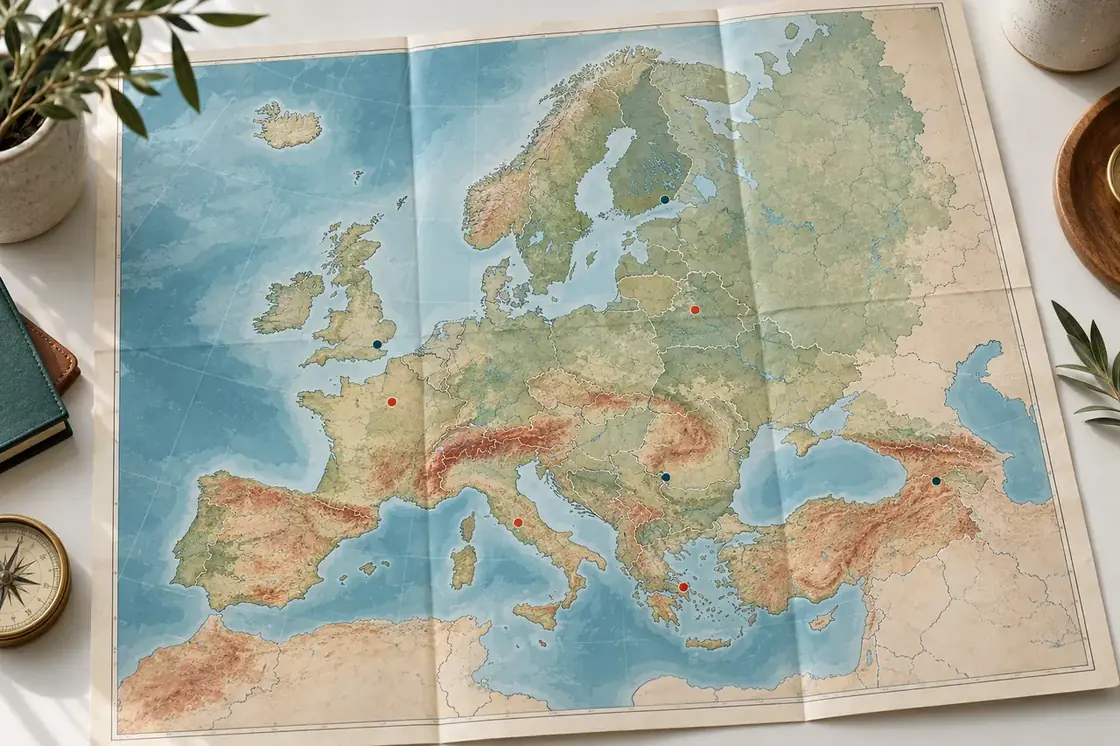
the Americasan capitals: countries and capitals in alphabetical order
Find a country in the first column and read its capital in the second. Flags are omitted so the list stays quick to scan; the written pairs and geographic grouping follow the site's data. Transliteration and spelling can differ between a school book and a national source.
| Country | Capital |
|---|---|
| Antigua and Barbuda | Saint John's |
| Argentina | Buenos Aires |
| Bahamas | Nassau |
| Barbados | Bridgetown |
| Belize | Belmopan |
| Bolivia | Sucre |
| Brazil | Brasilia |
| Canada | Ottawa |
| Chile | Santiago |
| Colombia | Bogota |
| Costa Rica | San Jose |
| Cuba | Havana |
| Dominica | Roseau |
| Dominican Republic | Santo Domingo |
| Ecuador | Quito |
| El Salvador | San Salvador |
| Grenada | St. George's |
| Guatemala | Guatemala City |
| Guyana | Georgetown |
| Haiti | Port-au-Prince |
| Honduras | Tegucigalpa |
| Jamaica | Kingston |
| Mexico | Mexico City |
| Nicaragua | Managua |
| Panama | Panama City |
| Paraguay | Asuncion |
| Peru | Lima |
| Saint Kitts and Nevis | Basseterre |
| Saint Lucia | Castries |
| Saint Vincent and the Grenadines | Kingstown |
| Suriname | Paramaribo |
| Trinidad and Tobago | Port of Spain |
| United States | Washington, D.C. |
| Uruguay | Montevideo |
| Venezuela | Caracas |
The count of 45 describes this dataset selection. Continental conventions, transcontinental cases, and the treatment of some territories can produce a different total elsewhere.
What the count in this list means
A common question is how many countries are in the Americas. When you use this page as a the Americasan capitals reference, its count follows the site's own geographic grouping rather than a universal rule. There is no single figure that every source applies in exactly the same way: some count sovereign states under a geographic convention, some follow a school list, and others include or separate transcontinental cases. Publications may also handle territories with disputed recognition differently. A useful reference should explain its scope instead of presenting a total as if no other method existed.
This the Americasan capitals reference contains 45 entries marked the Americas in the site's multilingual dataset. That keeps the table consistent with the site's search and quiz; it is not a diplomatic statement or an official United Nations count. For an assignment, exam, or classroom handout, follow the convention named by your teacher, textbook, or institution and state which one you are using.
The table gives one country-capital pair per row so it is easy to scan. It does not add population, area, or a judgment about each entity's political status. Those fields need their own source and date, and they are not required for the main task here: checking the the Americasan capitals associated with each country in this selection.
A regional orientation for reading the map
You can use compass directions to organize the Americasan capitals in your memory, as a study aid rather than an official line between subregions. Lisbon and Madrid sit in the southwest; London, Dublin, Paris, and Brussels help form a western group; Copenhagen, Stockholm, Oslo, Helsinki, and Reykjavík point north. Nearby cities can help you remember related pairs, but proximity is not a substitute for checking each row.
Further east and toward the center, the Americasan capitals include Berlin, Prague, Warsaw, Vienna, Budapest, Bratislava, and Ljubljana. Southeastward, the list includes Zagreb, Sarajevo, Belgrade, Podgorica, Skopje, Tirana, and Athens. These groups are a way to move through the table; regional boundaries change with historical, political, and educational context. Do not infer membership in an organization from a map region.
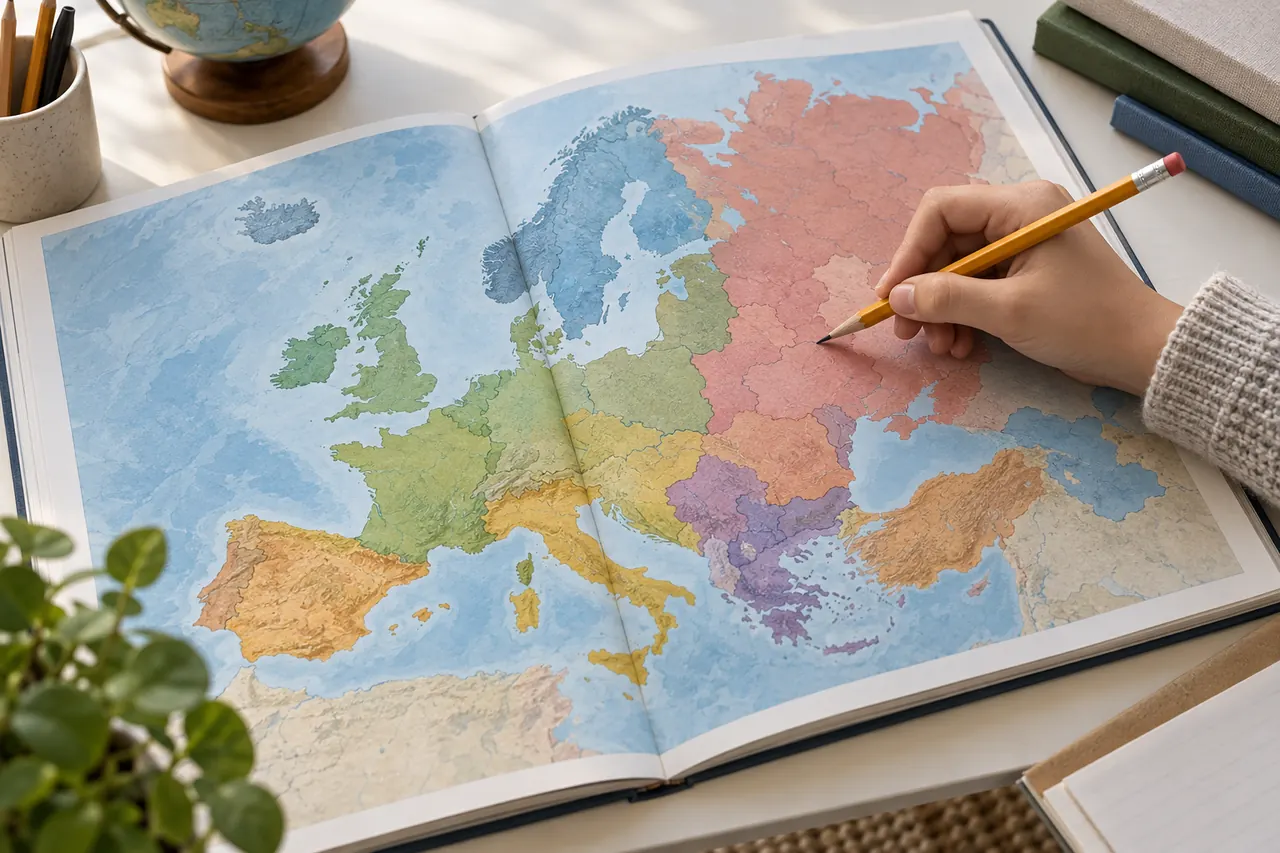
Country and capital names that are often confusing
The Netherlands is usually paired with Amsterdam, while The Hague is the seat of government and several national institutions. For a question asking for the capital, this table uses Amsterdam. If a question asks where parliament or the government is located, read it carefully because it is asking about a different function. These answers can look contradictory when the questions are not actually the same.
Switzerland is represented here by Bern. It is more precise to describe Bern as the federal city or seat of the federal authorities than to say that the constitution names a capital in the same way as many other countries. In a school capital list, Bern is the answer normally expected. In an institutional or legal text, keep that qualification and check the context of the source.
Spelling also varies by language and convention: Kyiv and Kiev, Chișinău and Chisinau, Vilnius and Vilna, or Skopje and Skopie. The dataset shows a localized form for easier reading, but a test may require the form used by a particular textbook. Keep the country as your clue, accept the spelling used by your course, and do not treat one transliteration as the only existing name.
How to study the Americasan capitals without memorizing at random
For the Americasan capitals, start with a short pass through the table. Read five or six countries, cover the capital column, and try to say each answer before revealing it. Then reverse the exercise: look at a capital and recall the country. Retrieving information in both directions helps you notice whether you only recognize a word when you see it or can produce the answer without a prompt.
Split the list into small groups and organize them in a way that makes sense to you: by first letter, approximate region, or an imaginary route between nearby cities. You do not need to learn one fixed sequence. At the end of a group, mark only the pairs you missed and return to them after a short pause. An immediate repeat can create familiarity; spaced review checks whether you still remember the answer later.
Once the Americasan capitals feel less new, mix countries from different areas and change the order. That prevents you from associating a capital only with the row where it appeared. Paper cards or the homepage search can help you cover one column. The world capitals quiz is useful for multiple-choice practice, but recalling an answer freely is a different step and usually requires more effort.
Using the list for review or lesson preparation
For individual study of the Americasan capitals, choose a group and record mistakes, and practise those pairs again at the end. For group work, one person can read a country while everyone else writes the capital before comparing answers. Agree in advance whether spelling variants are acceptable, especially when the group uses different books or languages. This list is a lookup reference, not a scored test or certificate of knowledge.
A teacher can choose rows for a map activity, review sheet, or oral check. If students need to locate cities, add a school map with its own scale and legend: the illustration on this page is decorative and gives no coordinates. To compare results between sessions, keep the selection and marking rules the same. That helps distinguish improved recall from a change in the criteria.
Common mistakes when learning countries and capitals
Confusing large cities with the Americasan capitals is common. Population, tourism, and international fame do not determine a capital: for example, Barcelona does not replace Madrid, and Sydney does not replace Canberra. When an answer feels obvious because a city is well known, check the country and remember the complete pair instead of relying on familiarity.
Another mistake is learning in only one direction. If you can read Paris and recognize France but cannot answer France when you see Paris, your memory still depends on a prompt. Alternate country-to-capital and capital-to-country, shuffle the order, and revisit mistakes later. If a school source uses another spelling, note it beside the form in this table and use the version requested by the exercise.
Scope and limits of this geography reference
the Americasan capitals and country names come from the multilingual dataset used by the site and are shown in the language of the page. A translation may use a traditional exonym, a newer transliteration, or a spelling common in school materials. This list is practical for studying in English, but it does not replace a mapping standard, government source, or the instructions of an educational institution.
The selection also omits changing information such as population, current diplomatic status, a temporary institutional seat, or administrative divisions. If your question concerns one of those topics, check a specialist source and its publication date. For a basic lookup of the Americasan capitals, use the two columns; to play or check what you have learned, open the practice resource linked below.
Frequently asked questions about the Americasan capitals
How many the Americasan capitals are in this list?
The table contains 45 entries classified as the Americas in this site's dataset. Other lists can count a different number because their geographic and political conventions are not identical. The figure describes the scope of this page, not a universal or official total.
Which the Americasan capitals are easiest to mix up?
Questions often arise between a capital and another well-known city, such as Amsterdam and The Hague in the Netherlands or Madrid and Barcelona in Spain. Spellings such as Kyiv/Kiev and Chișinău/Chisinau also vary. Check what the question asks and which form your source expects.
Is Amsterdam or The Hague the capital of the Netherlands?
Amsterdam is the capital shown in this list. The Hague is the seat of government and important national institutions. The answer depends on whether the question asks for the capital or for the location of government functions.
How can I memorize the Americasan capitals more quickly?
Divide the table into small groups, cover one column, answer without looking, and review missed pairs first. Alternate country-to-capital and capital-to-country, shuffle the order, and practise again after a pause. Each learner's pace differs; there is no guaranteed timetable.
Does this page include an official political map?
No. The images are editorial illustrations that accompany the study material. The written list is the reference content on this page; use an institutional map or the source required by your course for borders, coordinates, or official conventions.